

Are Expensive Headphones Worth It? When to Spend More
Yes, sometimes: expensive headphones are worth it if you need real active noise cancellation (ANC), long listening sessions, or gear built to survive years of daily use. They’re a poor buy if you stream compressed audio through a phone in a loud subway car, expecting a $50 pair of earbuds to feel like a $400 flagship.
The case for spending more comes down to three things: measurably better ANC performance, comfort engineered for multi-hour wear, and parts that get replaced instead of thrown out. The case against it is just as concrete: the Law of Diminishing Returns kicks in hard past the midrange, and a bad source file or a noisy room caps how much any headphone can actually deliver.
- Worth it when: you fly or commute often, work in an open office, or listen for hours at a stretch
- Not worth it when: you’re streaming low-bitrate audio, working out, or already happy with a budget pair that fits well
- The ceiling: even flagship drivers can’t fix a bad recording or a loud room
Key Takeaways
Expensive headphones earn their price through better ANC, comfort, and repairable build quality, not through dramatic sound upgrades once you pass the midrange.
| Point | Details |
|---|---|
| Diminishing returns are real | Gains shrink fast past $150 to $350; flagship pricing buys refinement, not transformation. |
| ANC and comfort drive value | For daily wireless use, noise cancellation and fit matter more than raw fidelity for most listeners. |
| Source and room matter first | Upgrading your audio file quality or listening environment often beats upgrading headphones alone. |
| Match features to your problem | Buy based on what’s actually wrong with your current pair: comfort, ANC, or durability. |
| Egwat fits ANC-first buyers | Egwat’s hybrid ANC and long-battery models target the commuter and travel use-cases where spending more pays off. |
Table of Contents
- Are Expensive Headphones Worth It for Everyday Listening?
- Do Expensive Headphones Actually Sound Better?
- Which Premium Features Are Worth Paying For?
- When Does Spending More on Headphones Pay Off?
- When Are Expensive Headphones Not Worth It?
- How Should You Audition Headphones Before Buying?
- What Do Experts Say About the Real Value of Premium Audio?
- A Publisher’s Take on When to Spend More
- Which Egwat Headphones Match Your Use Case?
- Frequently Asked Questions
- Sources
Are Expensive Headphones Worth It for Everyday Listening?
The honest answer depends on what “expensive” is buying you. Premium headphones justify their price through engineering you can measure, not just marketing you can read.
Multi-driver designs, precision-tuned dynamic drivers, and (in wired setups) integrated DAC/amp components cost real money to develop and source. So does the software side: ANC that actually adapts to your environment relies on multiple microphones and dedicated digital signal processors, not just a “noise cancelling” sticker on the box. Wireless chips supporting newer codecs, multipoint connections, and longer battery life all add to bill-of-materials costs that cheaper headphones skip.
Then there’s everything after the sale. Brands that back their headphones with real warranty coverage, replaceable ear pads, and companion apps with genuine EQ control are absorbing costs that a $30 pair of earbuds never has to worry about. SoundGuys has documented that this build quality and long-term support is often the actual value proposition, more than any single sound upgrade.
- Multi-driver or hybrid ANC systems with dedicated DSP chips
- Premium materials (metal hinges, memory foam, protein leather) that resist wear
- Replaceable cables, ear pads, and battery components
- App-based EQ, firmware updates, and multipoint pairing support
Pro Tip: Check whether a “premium” feature has a technical spec behind it (mic count, ANC decibel reduction, driver size) or just a marketing name. If a product page can’t tell you the ANC reduction in dB or the driver size in mm, you’re probably paying for branding, not engineering.
Do Expensive Headphones Actually Sound Better?
Sometimes, and the gains are real, but they shrink fast once you get past the midrange. Moving from a $30 pair to a $150 pair usually delivers an obvious jump: cleaner high-frequency detail, tighter bass control, less distortion at higher volumes, and a wider, more stable soundstage. Moving from $150 to $600 delivers something, but it’s subtler, and plenty of listeners genuinely can’t tell the difference in a blind test.
Rough price bands and what to expect:
- Under $50: Functional sound, often boosted bass, noticeable distortion at higher volumes, minimal isolation
- $50 to $150: Clear improvement in detail and balance, decent build, basic ANC on some models
- $150 to $350: Strong ANC, refined tuning, better materials, and the sweet spot for most buyers
- $350 and up: Refinement more than transformation. Diminishing returns are steep here.
This is where measurement and perception start to diverge. A spec sheet can show a flatter frequency response or lower total harmonic distortion, but your ears are listening in a specific room, through a specific source file, at a specific volume. Headphonesty’s analysis makes the point that a compressed streaming file or an untreated room will flatten out differences that a lab test can still detect.
Pro Tip: Run an ABX style test if you can: play the same lossless track through both headphones, level-matched by ear or with a meter, and switch blind. Most listeners can reliably pick out differences below $150, but that reliability drops fast above $350 unless the track is uncompressed and the room is quiet.
Which Premium Features Are Worth Paying For?
Some premium features earn their price every single day. Others are nice-to-haves that only matter for specific use cases. Here’s how the money usually breaks down:
- Active noise cancellation (ANC): Cuts low-frequency drone from engines, HVAC systems, and traffic. This is the single feature PCMag flags as the real reason to splurge on wireless headphones, not sound fidelity.
- Hybrid ANC (feedforward + feedback mics): More consistent cancellation across frequencies, better on planes and in offices than single-mic systems.
- Multipoint Bluetooth: Switch between your laptop and phone without repairing. Genuinely useful if you’re on calls all day.
- High-quality call microphones: Matters if you take meetings in headphones, largely irrelevant if you don’t.
- Long battery life: Fewer charging interruptions on long flights or workweeks.
- Durable materials and replaceable parts: Lower cost per year of ownership, even if the sticker price is higher.
- App tuning and spatial audio: Nice for customization, but gains are subtle and device-dependent.
The trade-offs are real too. ANC circuitry adds weight and draws battery, and wireless tech ages faster than a simple wired design because codecs and chipsets evolve. A wired pair with low impedance will also perform more predictably across devices than a high-impedance model that needs a dedicated amp to sound its best.
When Does Spending More on Headphones Pay Off?
Certain listening habits make premium gear a genuinely good investment. If you recognize yourself in one of these profiles, the upgrade usually earns its cost.
- Frequent travelers and commuters: Airplane cabin noise and subway rumble sit in the low-frequency range ANC handles best. Cost analyses suggest the ANC premium runs $50 to $200 over a comparable passive model, often paid back within months of daily use.
- Open-office workers: Constant low-level chatter is exhausting to tune out manually; ANC does it automatically.
- Multi-hour listeners: Comfort engineering (clamping force, weight distribution, breathable pads) prevents the fatigue cheap headphones cause after 90 minutes.
- Home critical listeners with good sources: If you already have lossless files or a solid streaming tier, better drivers have material to work with.
- Buyers who value repairability: Paying more for replaceable parts spreads the cost over years, not months.
Do the math on a daily commute: the cost per day of an ANC pair can be low when used regularly, and that cost drops further if the headphones last multiple years, which replaceable-parts models are built to do.
When Are Expensive Headphones Not Worth It?
Plenty of situations make premium pricing a poor match for how you actually listen. If any of these describe you, save the money.
- Casual or short-session listening: If you wear headphones for 20 minutes at the gym, comfort tech built for six-hour flights is wasted on you.
- Low-bitrate streaming: Highly compressed audio erases the fine detail expensive drivers are built to reproduce.
- Already-loud environments: If ambient noise already overwhelms passive isolation, marginal ANC gains won’t be audible anyway.
- Brand-chasing over feature-matching: Paying extra for a logo instead of a spec you’ll actually use is the most common overspend.
- Red flags to watch for: firmware-locked features that require a subscription, total dependence on a proprietary wireless protocol, and no replaceable parts at all.
How Should You Audition Headphones Before Buying?
A short, structured test beats an impulse buy every time. Run through this checklist in-store or during a return window:
- Comfort and weight: Wear them for at least ten minutes. Clamping pressure you don’t notice in the first minute often becomes uncomfortable by minute thirty.
- Seal and leakage: Check for sound leaking out or outside noise leaking in, especially with over-ear designs.
- Sound signature on familiar tracks: Bring a song you know well rather than trusting a store demo track.
- ANC test: Test against real sources of drone, an air conditioner, an engine, office hum, not just silence.
- Call mic test: Record a voice memo and play it back to check clarity.
- Multipoint and connectivity: Try switching between two devices if that matters to your workflow.
- App features and codec support: Confirm EQ options and whether the app locks any feature behind a subscription.
- Battery life and charging: Check quoted hours against your actual usage pattern, not the marketing headline number.
AudioReputation’s framework is a useful filter here: buy based on the specific problem your current headphones create, whether that’s discomfort, poor ANC, or fragility, rather than treating a higher price as a stand-in for quality.
Pro Tip: If you can, bring a lossless file on a USB drive or use a hi-res streaming trial during your test. Comparing headphones through a heavily compressed Bluetooth stream from a random playlist hides real differences that a properly mastered file reveals.
What Do Experts Say About the Real Value of Premium Audio?
Two things get underestimated in most headphone advice: how much the room and source matter, and how much of a premium purchase is emotional rather than technical.
Audiophiles chasing better headphones while ignoring their audio system or the mastering quality of their files are often solving the wrong problem. The bottleneck usually isn’t the transducer. It’s everything feeding it.
That’s the core argument Headphonesty makes, and it lines up with what CNET’s testing has found across dozens of ANC models: a well-chosen midrange pair often delivers most of what a flagship offers, because flagships are refining details most listening setups can’t fully expose anyway.
None of that erases the emotional side of the purchase. Some listeners simply get years of genuine enjoyment out of owning something well-built, and that reward is real even when a blind test says the fidelity gap is small.
Pro Tip: Upgrade in this order: source file quality first, headphone choice second, room treatment third if you’re listening at home. Spending on headphones before fixing a bad source is the single most common wasted upgrade.
A Publisher’s Take on When to Spend More
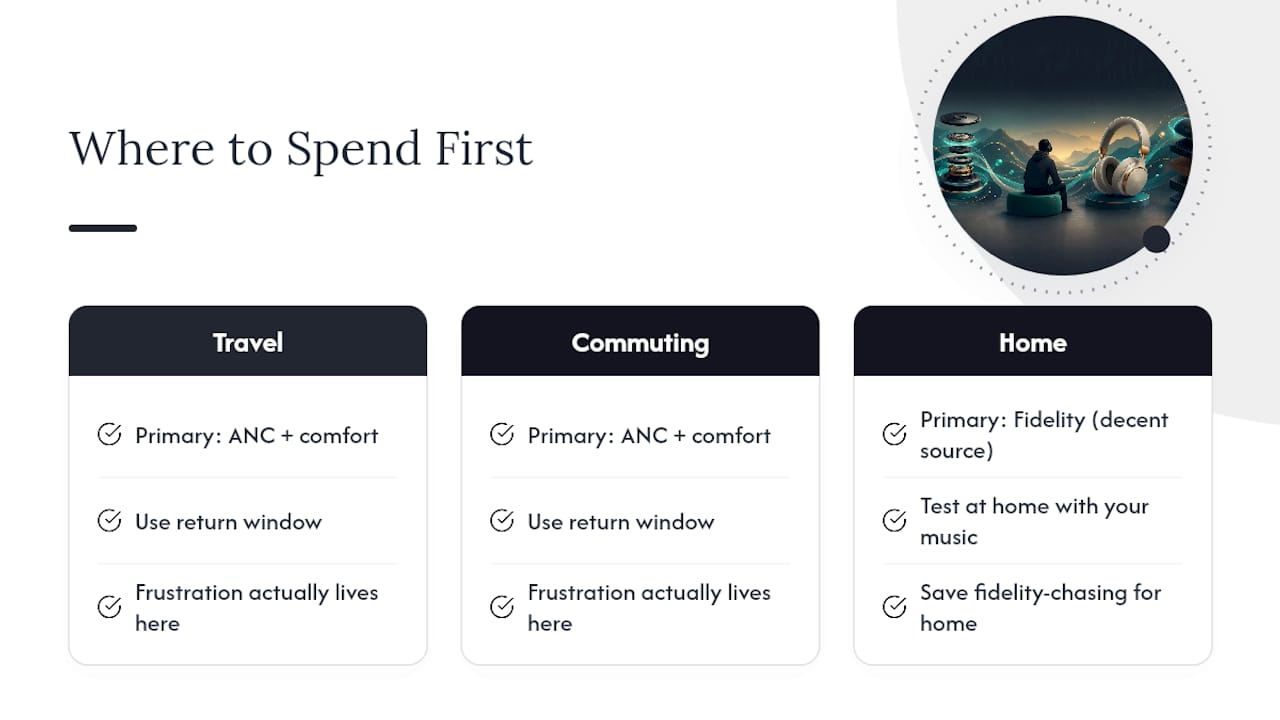
Our approach favors matching the purchase to the problem. Prioritize ANC and comfort for travel and commuting, because that’s where the frustration actually lives, and save fidelity-chasing for a home setup with a decent source. Years of comparing headphone specs against real listening conditions makes one pattern obvious: buyer’s remorse comes from mismatched expectations, not from the price tag itself. Whenever a return window is available, use it. Testing at home, with your own music, in your own environment, tells you more than any store demo ever will.
Which Egwat Headphones Match Your Use Case?
If the checklist above pointed you toward ANC, comfort, or long battery life, Egwat’s lineup is built around exactly those priorities rather than chasing spec-sheet bragging rights. Every model ships with the practical features this article flagged as the ones that actually justify a higher price: hybrid ANC, replaceable components, and companion app controls instead of gimmicks.
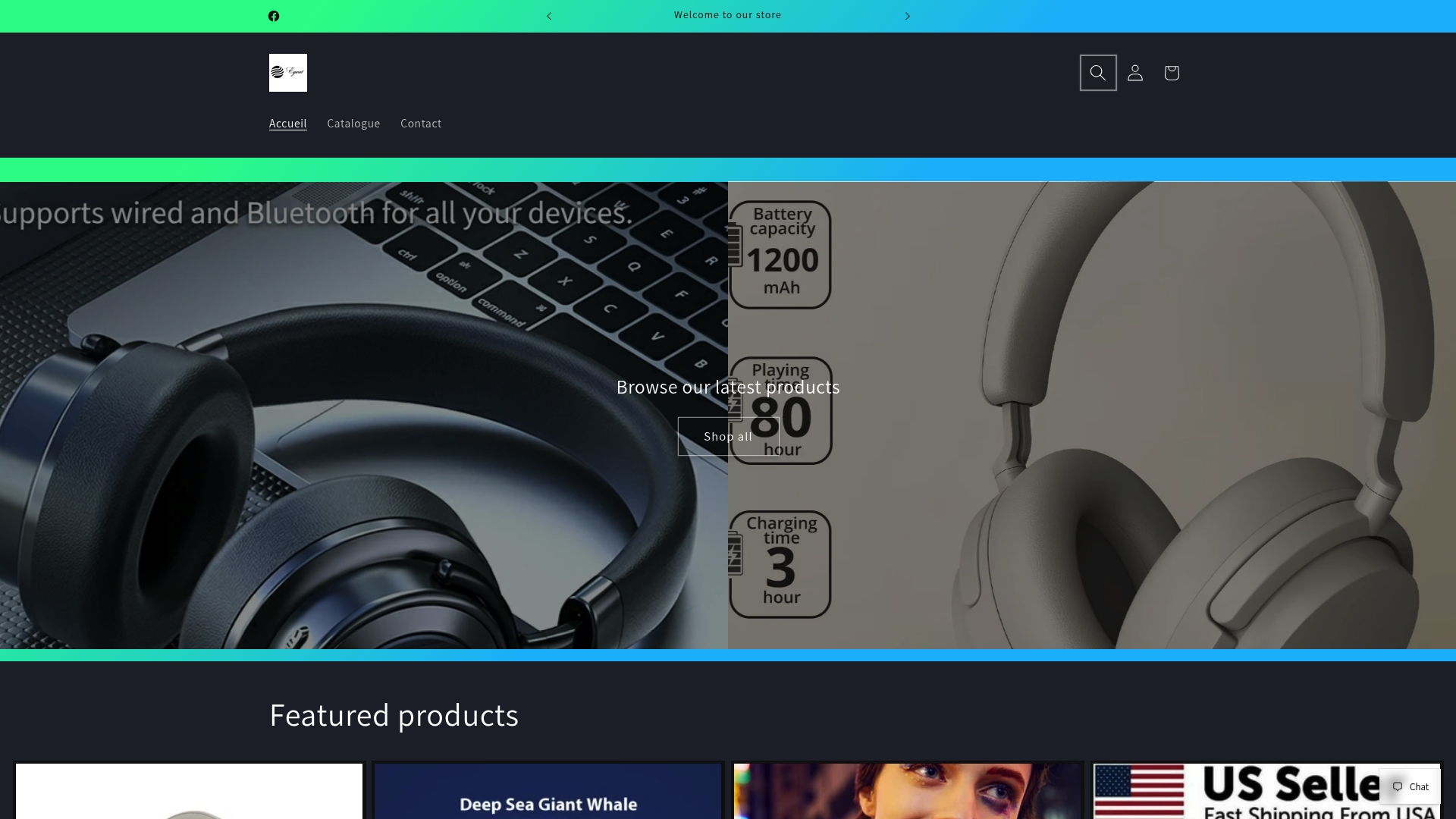
- Commuters and frequent flyers: the 125-hour battery hybrid ANC headphones cut engine and traffic drone by up to 30dB without needing a charge every other day.
- Long listening sessions at a desk: the premium retro over-ear model pairs ANC with padding built for multi-hour wear.
- Travelers who need something packable: the folding hybrid ANC headphones collapse for a bag without giving up noise cancellation.
- Compact, minimal-fuss listening: the headworn Bluetooth earphones offer noise reduction in a lighter form factor.
Every model includes replaceable pads and a standard warranty, so the long-term cost argument this article makes applies directly. Browse the ANC wireless headset lineup and pick the profile that matches how you actually listen, not the one with the biggest number on the box.
Frequently Asked Questions
Are expensive headphones worth it for casual listening? Usually not. Casual, short-session listening rarely benefits from features built for travel or critical listening, so a comfortable midrange pair typically covers it.
Are noise cancelling headphones worth it if I work from home? It depends on your environment. Open floor plans and shared spaces with background chatter benefit; a quiet private office may not need ANC at all.
Is high-end audio worth it for streaming music? Only if your streaming tier delivers lossless or high-bitrate files. Compressed streams cap what any headphone, expensive or not, can reveal.
Do premium headphones matter for gaming or calls? Multi-mic arrays and app-based EQ genuinely help call clarity and positional audio, making premium features relevant here even for casual listeners.
What’s the sweet spot price range for most buyers? Most reviewers and buyers land in the $150 to $350 range, where ANC, comfort, and sound quality all improve substantially over budget models without flagship pricing.
Sources
- Audiophiles are ignoring the difference an audio system/mastering engineer makes — Headphonesty
- Splurging on wireless headphones? Do it for ANC and comfort, not sound quality — PCMag
- Expensive headphones are worth it: Here’s why — SoundGuys
- Best noise cancelling headphones — CNET
- Is a Noise Cancelling Headphone Worth the Extra Cost? A detailed analysis — Review Atlas
- Are expensive headphones worth it? — AudioReputation